Hi,
I want to thank all my visitors. I want to continually improve this blog and therfore if anyone has any specific comments, please post them. It will help me in my future posts.
In addition, if someone is truly interested in posting weekly columns here: post a message as a comment with your name and email.
Take Care.
Wednesday, December 14, 2005


What is the Fulford Percussion Hammer?
Source: www.kohngroup.com/treatments.htm

The Fulford Percussion Hammer was invented by Dr. Robert Fulford to help treat the fascial "stuckness" in the body. He was an engineer and an osteopathic physician who determined that the use of the percussion hammer through a vibrational frequency is very effective in "unlocking" stuck fascia.
How does it work?
The percussion hammer vibrates about the frequency of middle "C" on the piano, which is the frequency of the fascia in the body. Application of the percussion hammer on one side of the body and monitoring on the other side of the body will pick up the vibrational frequency of the percussion hammer on the opposite side of the body within about 2 minutes after placing it on the body. It is a very effective treatment tool, and can be used in patients of all ages, including infants. Physicians are trained through special courses in learning its use.
The Fulford Percussion Hammer was invented by Dr. Robert Fulford to help treat the fascial "stuckness" in the body. He was an engineer and an osteopathic physician who determined that the use of the percussion hammer through a vibrational frequency is very effective in "unlocking" stuck fascia.
How does it work?
The percussion hammer vibrates about the frequency of middle "C" on the piano, which is the frequency of the fascia in the body. Application of the percussion hammer on one side of the body and monitoring on the other side of the body will pick up the vibrational frequency of the percussion hammer on the opposite side of the body within about 2 minutes after placing it on the body. It is a very effective treatment tool, and can be used in patients of all ages, including infants. Physicians are trained through special courses in learning its use.
Tuesday, December 13, 2005
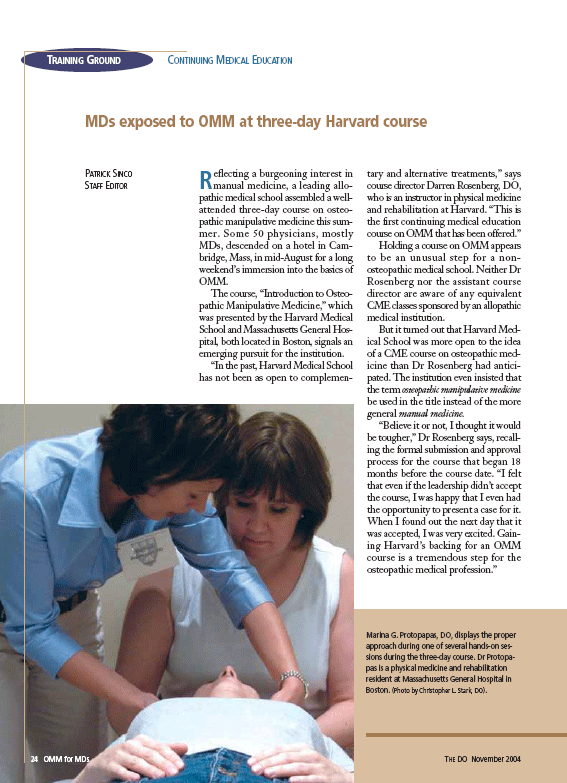
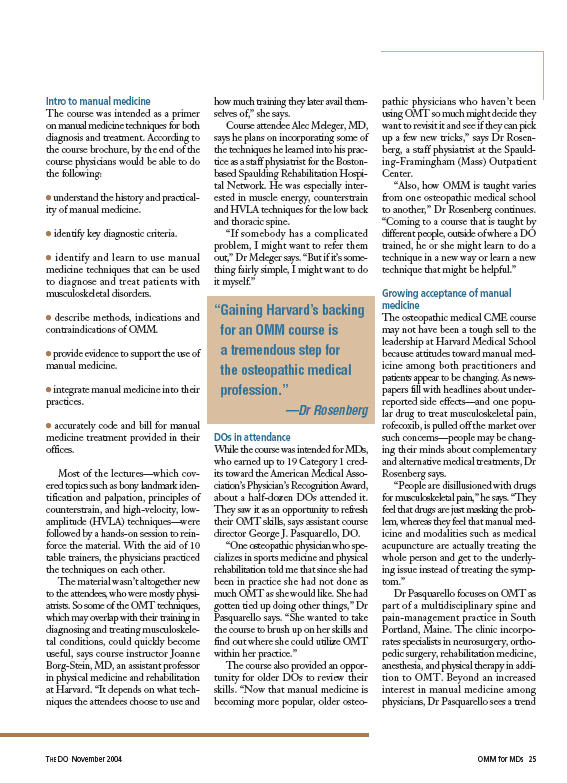
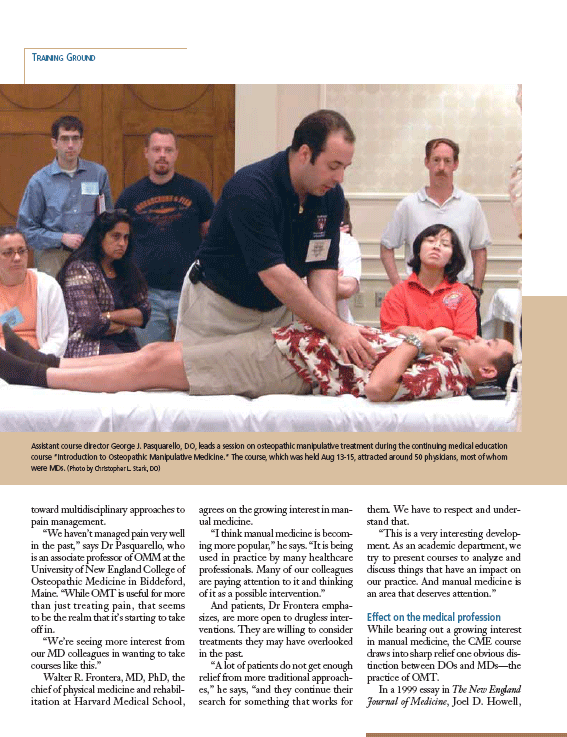
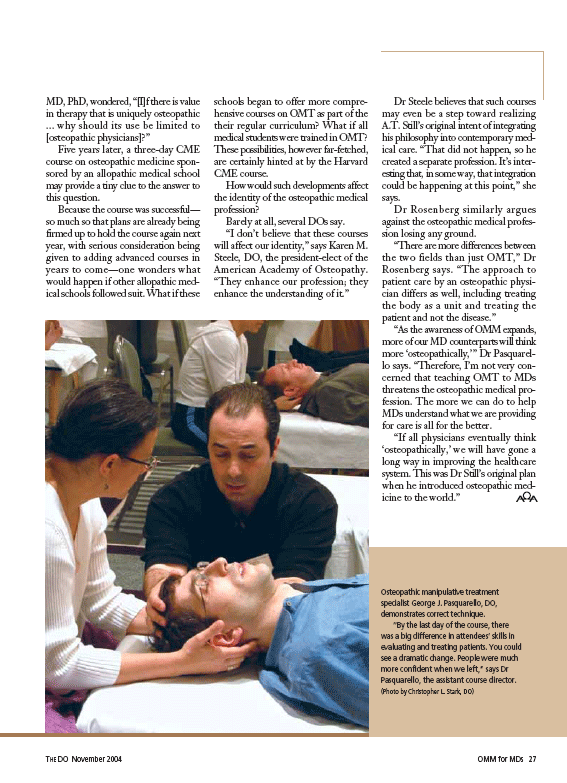
Osteopathic Manipulative Treatment for MDs, that to at Harvard University!
Source: Journal of the American Osteopathic AssociationWeb site for Journal of the American Osteopathic Association.www.jaoa.org/


Sunday, December 11, 2005
What Osteopathic Medicine Has To Offer‘ Golden Girls’
Source: AOA website http://www.Osteopathic.org
by Melicien A. Tettambel, DO
Osteopathic physicians have been trained to appreciate the role of the musculoskeletal system in the maintenance of health. Because physicians understand the reciprocal relationship of structure and function in the health of mature women, they also have opportunities to promote healthy aging.
Female healthcare consumers have been receiving education about menopause, osteoporosis, cancer and chronic disease processes that affect women through support groups, magazines, radio, the Internet, and other telecommunication media. They have been bombarded with information about exercise, nutrition, pharmacotherapy and other therapies.
During well-woman visits physicians offer additional counseling about healthy aging, cancer screening or laboratory evaluation. However, osteopathic physicians can further utilize clinical diagnostic skills of observation and palpation of the musculoskeletal system to positively influence total body function. It also gives physicians the opportunity to address other concerns including hormone therapy.
Physicians need to be prepared to discuss concerns women have about hormone therapy and identify ways to approach women who decide to stop appropriate hormone treatments. In addition, physicians should address these issues and be sensitive to women and the concerns they may have about sexuality. This is even more critical as women become widowed, retired and “empty nesters”. Those who might be considering becoming sexually active again have concerns about vaginal dryness, incontinence, or increased arthritic pain, which interferes with satisfying intimacy. Medications used to treat women for some of these issues may be too expensive or have unpleasant side effects. In addition, some patients may be too depressed to discuss any of these problems.
While it is true that women are twice as likely to be depressed, it is also true that there are many more “mature” women than men living past 70 years of age. They may fear that depression is a sign of senility or part of the aging process–which is incorrect!
Fear of consequences of aging, pain, and depression can create a complicated circuit when it comes to women and wellness. Healthcare professionals have recommended counseling, medication and some physical therapies.
Osteopathic physicians who provide Osteopathic Manipulation Treatments (OMT), stabilize body structure to facilitate physiological function. Therapists may then complement OMT with counseling or other physical therapies.
Evaluating Posture, Breathing
Posture is the result of one’s continuing ordeal with locomotion and gravity. With advancing age there may be spinal changes affecting spinal curves and gait. Weight gain or loss as results of nutrition or activity patterns also affects posture. Women lose height and develop increased thoracic kyphosis with osteoporosis. Arthritic diseases also can cause structural and gait deformities.
Soft-tissue, functional and indirect treatment techniques increase joint range of motion and mobilize tissue fluids to reduce inflammation and edema. The patient may be inclined to articulate other concerns about herself during the course of a treatment. This could be an opportunity to cultivate rapport in developing a treatment plan for other issues.
In addition to evaluating posture (structural health), the osteopathic physician can “read” a patient’s emotional status by observing her respiration and noting changes in tissue tension. Unusually slowed or rapid breathing may convey anxiety or depression. By focusing on the patient’s breathing, an osteopathic physician may also note how the respiratory system might be engaged to maintain general health. Manual treatment of the thorax can influence ones ability to fight infection, metabolize medicines, and reduce inflammation.
It is interesting that breathing may be affected by any or by all of the five most common fatal diseases in women. According to the National Women’s Health Information Center, US Public Health Service Office on Women’s Health, Department of Health and Human Services 1999 Report, 50% of the causes of all 10 leading killers in women include heart disease, cancer, stroke and lung disease.
By encouraging female patients to change poor lifestyle behaviors such as smoking, drinking and inactivity, young women could lower their risk of premature death and disability by as much as 50%.
Thoracic Spine Treatment
Treatment of the thoracic spine with OMT may influence the sympathetic nervous system’s effect on cardiac function. Mobilization of the rib cage may reduce strain of inhalation or exhalation while fighting lung infections. Improved breathing as a result of rib-raising techniques–or lymphatic drainage–aids in dissipating infection.
Altered respiration to encourage slow, deep breathing helps to relieve pain and “breathe away” toxins or drug metabolites. Treatment of the thoracic inlet with OMT decompresses tensions on the vascular and neural contents of the upper thorax to relieve edema. In addition to addressing restrictions of the rib cage, release of respiratory diaphragmatic tension facilitates motion of body fluids and lymphatic drainage.
Women with breast cancer may be treated by lymphatic massage therapists to
reduce incidence of postmastectomy lymphedema. These patients will derive greater benefit from their therapies if they also receive OMT to the thorax, spine and diaphragm.
Osteopathic physicians should keep in mind that treatment of the thorax with OMT may reduce the stress of breathing and congestion, and it may relieve pain. The American Lung Association promotes the slogan, “If you can’t breathe, nothing else matters.”
Treatment utilizing gentle OMT techniques that provide patient comfort is also beneficial in assisting respiration and general metabolism. The patient may be treated frequently and not become exhausted or stressed by vigorous handling of body tissues. Whether in the office or in the hospital, OMT to the thorax need not take more than 10 minutes.
Final Notes
OMT offers “golden girls” pain relief, increased physical mobility, improved metabolism, and antidepressant relief through manual treatment. It may reduce the need to add more pharmaceuticals to a treatment regimen to achieve similar goals of improved circulation, and nerve and joint functions, as well as reduced pain and inflammation. OMT techniques have few side effects or cross-reactivity with medication. They may aid in the promotion of longevity and independent living.
Melicien A. Tettambel, DO, is a member of the AOA’s House of Delegates. She also is a fellow of the AAO and ACOOG. She can be reached by calling (660) 627-1812, by fax at (660) 627-4799 or via e-mail at mtettambel@atsu.edu.
by Melicien A. Tettambel, DO
Osteopathic physicians have been trained to appreciate the role of the musculoskeletal system in the maintenance of health. Because physicians understand the reciprocal relationship of structure and function in the health of mature women, they also have opportunities to promote healthy aging.
Female healthcare consumers have been receiving education about menopause, osteoporosis, cancer and chronic disease processes that affect women through support groups, magazines, radio, the Internet, and other telecommunication media. They have been bombarded with information about exercise, nutrition, pharmacotherapy and other therapies.
During well-woman visits physicians offer additional counseling about healthy aging, cancer screening or laboratory evaluation. However, osteopathic physicians can further utilize clinical diagnostic skills of observation and palpation of the musculoskeletal system to positively influence total body function. It also gives physicians the opportunity to address other concerns including hormone therapy.
Physicians need to be prepared to discuss concerns women have about hormone therapy and identify ways to approach women who decide to stop appropriate hormone treatments. In addition, physicians should address these issues and be sensitive to women and the concerns they may have about sexuality. This is even more critical as women become widowed, retired and “empty nesters”. Those who might be considering becoming sexually active again have concerns about vaginal dryness, incontinence, or increased arthritic pain, which interferes with satisfying intimacy. Medications used to treat women for some of these issues may be too expensive or have unpleasant side effects. In addition, some patients may be too depressed to discuss any of these problems.
While it is true that women are twice as likely to be depressed, it is also true that there are many more “mature” women than men living past 70 years of age. They may fear that depression is a sign of senility or part of the aging process–which is incorrect!
Fear of consequences of aging, pain, and depression can create a complicated circuit when it comes to women and wellness. Healthcare professionals have recommended counseling, medication and some physical therapies.
Osteopathic physicians who provide Osteopathic Manipulation Treatments (OMT), stabilize body structure to facilitate physiological function. Therapists may then complement OMT with counseling or other physical therapies.
Evaluating Posture, Breathing
Posture is the result of one’s continuing ordeal with locomotion and gravity. With advancing age there may be spinal changes affecting spinal curves and gait. Weight gain or loss as results of nutrition or activity patterns also affects posture. Women lose height and develop increased thoracic kyphosis with osteoporosis. Arthritic diseases also can cause structural and gait deformities.
Soft-tissue, functional and indirect treatment techniques increase joint range of motion and mobilize tissue fluids to reduce inflammation and edema. The patient may be inclined to articulate other concerns about herself during the course of a treatment. This could be an opportunity to cultivate rapport in developing a treatment plan for other issues.
In addition to evaluating posture (structural health), the osteopathic physician can “read” a patient’s emotional status by observing her respiration and noting changes in tissue tension. Unusually slowed or rapid breathing may convey anxiety or depression. By focusing on the patient’s breathing, an osteopathic physician may also note how the respiratory system might be engaged to maintain general health. Manual treatment of the thorax can influence ones ability to fight infection, metabolize medicines, and reduce inflammation.
It is interesting that breathing may be affected by any or by all of the five most common fatal diseases in women. According to the National Women’s Health Information Center, US Public Health Service Office on Women’s Health, Department of Health and Human Services 1999 Report, 50% of the causes of all 10 leading killers in women include heart disease, cancer, stroke and lung disease.
By encouraging female patients to change poor lifestyle behaviors such as smoking, drinking and inactivity, young women could lower their risk of premature death and disability by as much as 50%.
Thoracic Spine Treatment
Treatment of the thoracic spine with OMT may influence the sympathetic nervous system’s effect on cardiac function. Mobilization of the rib cage may reduce strain of inhalation or exhalation while fighting lung infections. Improved breathing as a result of rib-raising techniques–or lymphatic drainage–aids in dissipating infection.
Altered respiration to encourage slow, deep breathing helps to relieve pain and “breathe away” toxins or drug metabolites. Treatment of the thoracic inlet with OMT decompresses tensions on the vascular and neural contents of the upper thorax to relieve edema. In addition to addressing restrictions of the rib cage, release of respiratory diaphragmatic tension facilitates motion of body fluids and lymphatic drainage.
Women with breast cancer may be treated by lymphatic massage therapists to
reduce incidence of postmastectomy lymphedema. These patients will derive greater benefit from their therapies if they also receive OMT to the thorax, spine and diaphragm.
Osteopathic physicians should keep in mind that treatment of the thorax with OMT may reduce the stress of breathing and congestion, and it may relieve pain. The American Lung Association promotes the slogan, “If you can’t breathe, nothing else matters.”
Treatment utilizing gentle OMT techniques that provide patient comfort is also beneficial in assisting respiration and general metabolism. The patient may be treated frequently and not become exhausted or stressed by vigorous handling of body tissues. Whether in the office or in the hospital, OMT to the thorax need not take more than 10 minutes.
Final Notes
OMT offers “golden girls” pain relief, increased physical mobility, improved metabolism, and
 antidepressant relief through manual treatment. It may reduce the need to add more pharmaceuticals to a treatment regimen to achieve similar goals of improved circulation, and nerve and joint functions, as well as reduced pain and inflammation. OMT techniques have few side effects or cross-reactivity with medication. They may aid in the promotion of longevity and independent living.
Melicien A. Tettambel, DO, is a member of the AOA’s House of Delegates. She also is a fellow of the AAO and ACOOG. She can be reached by calling (660) 627-1812, by fax at (660) 627-4799 or via e-mail at mtettambel@atsu.edu.
Osteopathic Manipulative Technique (O.M.T.) and Sports Medicine
Source: www.xprss.com/robeygroup/appreciation_x10.asp
Osteopathic Manipulative Technique (O.M.T.) is used frequently in sports medicine. It is used in the recovery from sports injuries, to enhancement performance in athletes and can be used successfully in high-impact sports such as running, basketball, tennis, football and baseball. O.M.T. techniques vary depending upon the physical injury. We use "high velocity manipulation" for acute injures to the spine. If an athlete is impacted from the side, his cervical, thoracic or lumbar vertebrae may be knocked out of alignment. High velocity, low impact adjustments, a.k.a. cracking of the spine, can gently move the segment or segments instantly back into place. If done right after the insult, you can prevent the soft-tissue damage often associated with chronic injuries, from occurring. On the other hand, soft tissue manipulation, where one gently moves the tissues through the barriers of pain and restriction, are useful in chronic injuries. The tissue changes associated with this type of injury are much harder to treat and require frequent visits to the osteopath. Another type of manipulation is called, "muscle energy". This is where the physician finds the barrier, such as a limitation in cervical rotation to the right, and gently holds the neck while the patient uses his own muscles at his own pace to turn in the opposite direction of the barrier. After a couple of seconds, the patient relaxes and the doctor would turn the neck incrementally towards the restriction slowly, taking up the slack and substantially increasing range of motion to the neck. There are many more techniques for many types of injuries and some used for the prevention of injuries.
OMT and Sports
Osteopathic Manipulative Technique (O.M.T.) is used frequently in sports medicine. It is used in the recovery from sports injuries, to enhancement performance in athletes and can be used successfully in high-impact sports such as running, basketball, tennis, football and baseball. O.M.T. techniques vary depending upon the physical injury. We use "high velocity manipulation" for acute injures to the spine. If an athlete is impacted from the side, his cervical, thoracic or lumbar vertebrae may be knocked out of alignment. High velocity, low impact adjustments, a.k.a. cracking of the spine, can gently move the segment or segments instantly back into place. If done right after the insult, you can prevent the soft-tissue damage often associated with chronic injuries, from occurring. On the other hand, soft tissue manipulation, where one gently moves the tissues through the barriers of pain and restriction, are useful in chronic injuries. The tissue changes associated with this type of injury are much harder to treat and require frequent visits to the osteopath. Another type of manipulation is called, "muscle energy". This is where the physician finds the barrier, such as a limitation in cervical rotation to the right, and gently holds the neck while the patient uses his own muscles at his own pace to turn in the opposite direction of the barrier. After a couple of seconds, the patient relaxes and the doctor would turn the neck incrementally towards the restriction slowly, taking up the slack and substantially increasing range of motion to the neck. There are many more techniques for many types of injuries and some used for the prevention of injuries.
OMT and Sports
Do you have Neck Stiffness?
Source: www.joselitodelacruz.com/Neck_Pain.htm
Osteopathic Treatment of Neck Problems

Muscle Strain
Most neck stiffness comes from muscle tightness of the trapezius and levator scapulae muscle, as shown in the diagram.
Cause: poor sitting posture, awkward sleeping position, sudden neck movements
Treatment: locate the muscle injury, reduce inflammation, promote lengthening of muscle and reduce pain. Ultrasound therapy may be used. Balancing muscle groups.
Background: Osteopaths manipulate these muscles so that they become lengthened and flexible. Massage works mainly to relax muscles but does not lengthen muscles; they tend to work on the surface rather than deep soft tissue release as an osteopath would. Osteopaths release tension in the muscles and improve circulation. The osteopath will rely on their skill to feel damaged tissue causing the problem. Osteopaths then go beyond the muscles and assess the spine, joints and other tissues in the area. The findings will link to your posture at work, home and sleep. Massage will not work on deeper structures and will only follow meridian channels.
Common Neck problems
Muscle strain
Joint strain/lock
Upper Rib problems
Scoliosis/curvature
Trapped nerve
Saturday, December 10, 2005
Why Choose a D.O. when you have lower back pain?
Source: Works Cited
ACOFP website: http://www.acofp.org/member_publications/oppoct_02.html
Sloane, PD, Slatt LM, Curtis P. Essentials of Family Medicine. 2nd ed. Baltimore, Williams and Wilkins, 1993.

Osteopathic Family Physicians offer several advantages in the treatment of lower Back Pain.
First something about Back Pain:
Back pain is the most common chronic pain complaint seen in the office with ten percent of patients having acute low back pain that develops into a chronic problem. Also, backache is the most frequent cause of limitation of activity under the age of 45.
What D.O.'s can offer to their patients:
Structural causes account for the great majority of low back pain complaints and reflect the anatomy, physiology, and mechanics of the spine.

ACOFP website: http://www.acofp.org/member_publications/oppoct_02.html
Sloane, PD, Slatt LM, Curtis P. Essentials of Family Medicine. 2nd ed. Baltimore, Williams and Wilkins, 1993.

Osteopathic Family Physicians offer several advantages in the treatment of lower Back Pain.
First something about Back Pain:
Back pain is the most common chronic pain complaint seen in the office with ten percent of patients having acute low back pain that develops into a chronic problem. Also, backache is the most frequent cause of limitation of activity under the age of 45.
What D.O.'s can offer to their patients:
Structural causes account for the great majority of low back pain complaints and reflect the anatomy, physiology, and mechanics of the spine.
- Training in OMT: Osteopathic manipulation, in conjunction with other treatment modalities, can be used to quickly and effectively reduce the low back pain caused by radicular and discogenic pathology. Soft tissue and myofascial release techniques are easy to employ and can be used to treat both problems.Gentle gapping techniques, counterstrain, and direct inhibitory pressure of the piriformis can be used for patients with radicular complaints.
- Like M.D.s, D.O.s can also prescribe anti-inflammatory medications in addition to using OMT.
- Result: A multidimensional treatment approach including the use of anti-inflammatory medications, manipulation, and a home exercise program has been shown to help reduce the infirmity caused by low back pain.
Thursday, December 08, 2005
Effects of osteopathic manipulative treatment on pediatric patients with asthma
Source: http://www.jaoa.org/cgi/content/full/105/1/7
Asthma is a common chronic condition that has long plagued the pediatric patient population. Asthma in children can cause excessive school absenteeism, hospitalizations, and even death. Osteopathic manipulative treatment (OMT) is an underutilized noninvasive treatment method for patients with asthma. The use of OMT may help decrease mortality and morbidity rates among this patient group. The authors conducted a randomized controlled trial attempting to demonstrate the therapeutic relevance of OMT in the pediatric asthma population. With a confidence level of 95%, results for the OMT group showed a statistically significant improvement of 7 L per minute to 9 L per minute for peak expiratory flow rates. These results suggest that OMT has a therapeutic effect among this patient population. The authors suggest that more clinical trials are required to better demonstrate the effectiveness of OMT in patients with asthma.
Asthma is a common chronic condition that has long plagued the pediatric patient population. Asthma in children can cause excessive school absenteeism, hospitalizations, and even death. Osteopathic manipulative treatment (OMT) is an underutilized noninvasive treatment method for patients with asthma. The use of OMT may help decrease mortality and morbidity rates among this patient group. The authors conducted a randomized controlled trial attempting to demonstrate the therapeutic relevance of OMT in the pediatric asthma population. With a confidence level of 95%, results for the OMT group showed a statistically significant improvement of 7 L per minute to 9 L per minute for peak expiratory flow rates. These results suggest that OMT has a therapeutic effect among this patient population. The authors suggest that more clinical trials are required to better demonstrate the effectiveness of OMT in patients with asthma.
Palpatory diagnosis and manipulative management of carpal tunnel syndrome.
Source: J Am Osteopath Assoc. 1994 Aug;94(8):632, 640.
Carpal tunnel syndrome was studied by use of supplemental palpatory diagnosis in 20 abnormal wrists. Restriction in motion at the carpal tunnel was quantified with a rating system. All wrists with carpal tunnel syndrome revealed at least moderate restriction to motion, as compared with only mild or no restriction in 20 wrists in normal, symptom-free subjects. Several participants (16 abnormal wrists) underwent osteopathic manipulative treatment, including a new "opponens roll" maneuver, and self-stretching, or a similar treatment accomplished by use of a self-treatment accomplished by use of a self-treatment appliance. In those treated, palpatory restriction decreased into the normal range, often before symptoms decreased. Improvement in nerve conduction studies usually followed within 1 to 3 months. Palpatory diagnosis is a useful adjunctive method of assessing patient status in carpal tunnel syndrome and helpful in prognosticating outcome. The modified manipulative technique described for the treatment of mild to moderate carpal tunnel syndrome may be effective in more severe cases.
Carpal tunnel syndrome was studied by use of supplemental palpatory diagnosis in 20 abnormal wrists. Restriction in motion at the carpal tunnel was quantified with a rating system. All wrists with carpal tunnel syndrome revealed at least moderate restriction to motion, as compared with only mild or no restriction in 20 wrists in normal, symptom-free subjects. Several participants (16 abnormal wrists) underwent osteopathic manipulative treatment, including a new "opponens roll" maneuver, and self-stretching, or a similar treatment accomplished by use of a self-treatment accomplished by use of a self-treatment appliance. In those treated, palpatory restriction decreased into the normal range, often before symptoms decreased. Improvement in nerve conduction studies usually followed within 1 to 3 months. Palpatory diagnosis is a useful adjunctive method of assessing patient status in carpal tunnel syndrome and helpful in prognosticating outcome. The modified manipulative technique described for the treatment of mild to moderate carpal tunnel syndrome may be effective in more severe cases.
Osteopathic Manipulative Treatment Benefits Go Beyond Back Pain
Source: www.osteopathic.org/email/012004/OMT_jan04.doc
Public awareness about Osteopathic Manipulative Treatment (OMT) is on the rise as medical studies prove the benefits of using OMT to treat back pain and health conditions like asthma. However, osteopathic physicians (D.O.s) will be quick to tell you that OMT has many other benefits, such as aiding in the treatment of pregnant mothers and their babies.
“As a D.O., I try to educate my patients about OMT by letting them know that it is one of the most unique and distinctive tools of osteopathic medicine,” says Melicien Tettambel, D.O., an osteopathic physician who practices in Kirksville, MO. “I also let them know how the use of OMT might benefit their individual health care needs.”
OMT requires a hands-on, whole body approach to diagnose health problems; treat dysfunctions; preserve good health; and prevent the spread of disease. In addition, OMT can enable D.O.s to treat and diagnose injuries or illnesses and has been found to be an effective treatment for individuals suffering from conditions ranging from carpal tunnel syndrome, menstrual pain, sinus disorders, and migraines.
Dr. Tettambel, states that OMT can benefit women during pregnancy by helping their bodies adjust to a growing uterus and displaced organs. OMT also can be used to help pregnant women with their posture by adjusting the body mechanics to work more efficiently.
“The ways that OMT can benefit a pregnant woman even extends to the delivery room,” says Dr. Tettambel. “For example, OMT used during labor can help a woman reduce the number of times she needs to push,” says Dr. Tettambel.
Infants can also benefit from OMT in a number of ways. Dr. Tettambel notes that OMT can help prevent abnormal physical development caused by how the infant reshaped his or her body to pass through the birth canal. And, recent findings show that infants and toddlers who suffer from repeat ear infections can find relief from OMT. The treatment requires the physician to put their fingers on the bony prominence behind the ear and applying a gentle rocking motion. This enables fluid to flow more freely through the ear.
“Best of all, children who received this treatment used less antibiotics and had fewer surgeries,” says Dr. Tettambel.
As complete physicians, D.O.s are able to prescribe medication, perform surgery and can be found practicing in all areas of medicine. D.O.s can also use their hands to help diagnose and treat injury and illness and to encourage the body’s natural tendency toward good health through the use of Osteopathic Manipulative Treatment (OMT).
Public awareness about Osteopathic Manipulative Treatment (OMT) is on the rise as medical studies prove the benefits of using OMT to treat back pain and health conditions like asthma. However, osteopathic physicians (D.O.s) will be quick to tell you that OMT has many other benefits, such as aiding in the treatment of pregnant mothers and their babies.
“As a D.O., I try to educate my patients about OMT by letting them know that it is one of the most unique and distinctive tools of osteopathic medicine,” says Melicien Tettambel, D.O., an osteopathic physician who practices in Kirksville, MO. “I also let them know how the use of OMT might benefit their individual health care needs.”
OMT requires a hands-on, whole body approach to diagnose health problems; treat dysfunctions; preserve good health; and prevent the spread of disease. In addition, OMT can enable D.O.s to treat and diagnose injuries or illnesses and has been found to be an effective treatment for individuals suffering from conditions ranging from carpal tunnel syndrome, menstrual pain, sinus disorders, and migraines.
Dr. Tettambel, states that OMT can benefit women during pregnancy by helping their bodies adjust to a growing uterus and displaced organs. OMT also can be used to help pregnant women with their posture by adjusting the body mechanics to work more efficiently.
“The ways that OMT can benefit a pregnant woman even extends to the delivery room,” says Dr. Tettambel. “For example, OMT used during labor can help a woman reduce the number of times she needs to push,” says Dr. Tettambel.
Infants can also benefit from OMT in a number of ways. Dr. Tettambel notes that OMT can help prevent abnormal physical development caused by how the infant reshaped his or her body to pass through the birth canal. And, recent findings show that infants and toddlers who suffer from repeat ear infections can find relief from OMT. The treatment requires the physician to put their fingers on the bony prominence behind the ear and applying a gentle rocking motion. This enables fluid to flow more freely through the ear.
“Best of all, children who received this treatment used less antibiotics and had fewer surgeries,” says Dr. Tettambel.
As complete physicians, D.O.s are able to prescribe medication, perform surgery and can be found practicing in all areas of medicine. D.O.s can also use their hands to help diagnose and treat injury and illness and to encourage the body’s natural tendency toward good health through the use of Osteopathic Manipulative Treatment (OMT).
Osteopathic Management Case Study: Somatic Dysfunction Causing Adolescent Chest Pain – Counterstrain Treatment
Source: www.acofp.org/member_publications/0405_4.htm

Chest pain is a common reason for patients to present to the osteopathic family physician's office. Chest pain can be complicated, even with adolescents and children. It is important to consider visceral etiologies, such as heart disease and upper gastrointestinal pathologies, but it is also important to diagnose and treat the musculoskeletal aspects of these patients (especially when visceral pathology has been ruled out). Counterstrain is one form of osteopathic manipulative medicine (OMM) that lends itself well to this situation of acute pain in an adolescent. This case illustrates the use of treating a young adolescent with chest pain.
Name of Technique: Counterstrain treatment for anterior fifth rib tenderpoint with patient seated.
Diagnosis: Tenderpoint at right fifth rib laterally at the anterior axillary line. This is termed a “depressed” rib in counterstrain terminology and it responds to treatment with a position of ease that further depresses the rib anteriorly.Patient Position:Seated on a low exam table.Physician Position:Standing behind the patient on the side opposite the dysfunctional rib, in this case standing to the left side. Physician places their left foot on the table next to patient with a small pillow on top of that knee.
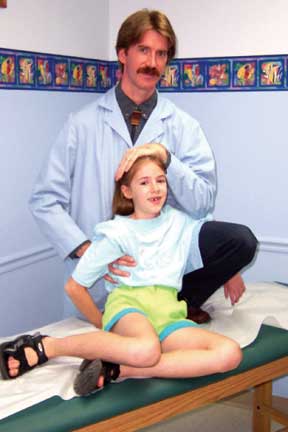
An example of a seated counterstrain treatment for a patient with anterior right fifth rib tenderpoint.
Chest pain is a common reason for patients to present to the osteopathic family physician's office. Chest pain can be complicated, even with adolescents and children. It is important to consider visceral etiologies, such as heart disease and upper gastrointestinal pathologies, but it is also important to diagnose and treat the musculoskeletal aspects of these patients (especially when visceral pathology has been ruled out). Counterstrain is one form of osteopathic manipulative medicine (OMM) that lends itself well to this situation of acute pain in an adolescent. This case illustrates the use of treating a young adolescent with chest pain.
Name of Technique: Counterstrain treatment for anterior fifth rib tenderpoint with patient seated.
Diagnosis: Tenderpoint at right fifth rib laterally at the anterior axillary line. This is termed a “depressed” rib in counterstrain terminology and it responds to treatment with a position of ease that further depresses the rib anteriorly.Patient Position:Seated on a low exam table.Physician Position:Standing behind the patient on the side opposite the dysfunctional rib, in this case standing to the left side. Physician places their left foot on the table next to patient with a small pillow on top of that knee.
Procedure:
- Locate the right fifth rib anterior tenderpoint, at the anterior axillary line, with the right index or long finger. Test the point with brief firm palpation. Have the patient gauge the tenderness on a scale of one to ten.
- Patient places the left forearm and arm (flexed at the elbow) over the physician's knee. Translate the patient gently to the left, localizing side bending to the right at the fifth rib tenderpoint. Not much side bending is needed.
- Hold the patient's head and neck with your left forearm and hand. Then flex the head forward, with some side bending to the right to relieve tension at the tenderpoint. Add rotation to fine tune localization. Usually rotation is needed toward the involved side, but occasionally it will be needed in the opposite direction.
- Fine tune all planes of motion, including subtle rotation of the trunk.
Reassess the tenderpoint. There should be a 70 percent, or greater, reduction in tenderness. Then monitor the point with very gentle pressure. Remember, this is not an inhibitory pressure technique. - Hold for approximately 90 seconds. You should feel a gradual softening of the involved tissues. Sometimes, you may feel a therapeutic pulsation. This indicates a good response to treatment.
- Slowly move the patient back to an independent seated position. The first few degrees of movement should be very slow, and then the rest may be done more quickly.
Reassess the tenderpoint with firm localized palpation. A reduction in tenderness of at least a seventy percent indicates a therapeutic response.
Wednesday, December 07, 2005
Query: What is the specialty college of Osteopathy called?
FELLOW OF:
FAAO American Academy of Osteopathy
FACOFP American College of Osteopathic Family Physicians
FACN American College of Neuropsychiatrists
FACOEP American College of Osteopathic Emergency Physicians
FACOI American College of Osteopathic Internists
FACOOG American College of Osteopathic Obstetricians and Gynecologists
FACOP American Osteopathic College of Pathologists
FACOPMS American College of Osteopathic Pain Management and Sclerotherapy
FACOS American College of Osteopathic Surgeons
FAOAAM American Osteopathic Academy of Addiction Medicine
FAOAO American Osteopathic Academy of Orthopedics
FAOCA American Osteopathic College of Anesthesiologists
FAOCAI American Osteopathic College of Allergy and Immunology
FAOCD American Osteopathic College of Dermatology
FAOCP American Osteopathic College of Pathologists
FAOCOPM American Osteopathic College of Occupational and Preventive Medicine
FAOCPR American Osteopathic College of Proctology
FAOCR American Osteopathic College of Radiology
FAOCRH American Osteopathic College of Rheumatology
FAOCRM American Osteopathic College of Rehabilitation Medicine
FOCOO American Osteopathic College of Ophthalmology and Otorhinolaryngology
FAOASM American Osteopathic Academy of Sports Medicine
FAAO American Academy of Osteopathy
FACOFP American College of Osteopathic Family Physicians
FACN American College of Neuropsychiatrists
FACOEP American College of Osteopathic Emergency Physicians
FACOI American College of Osteopathic Internists
FACOOG American College of Osteopathic Obstetricians and Gynecologists
FACOP American Osteopathic College of Pathologists
FACOPMS American College of Osteopathic Pain Management and Sclerotherapy
FACOS American College of Osteopathic Surgeons
FAOAAM American Osteopathic Academy of Addiction Medicine
FAOAO American Osteopathic Academy of Orthopedics
FAOCA American Osteopathic College of Anesthesiologists
FAOCAI American Osteopathic College of Allergy and Immunology
FAOCD American Osteopathic College of Dermatology
FAOCP American Osteopathic College of Pathologists
FAOCOPM American Osteopathic College of Occupational and Preventive Medicine
FAOCPR American Osteopathic College of Proctology
FAOCR American Osteopathic College of Radiology
FAOCRH American Osteopathic College of Rheumatology
FAOCRM American Osteopathic College of Rehabilitation Medicine
FOCOO American Osteopathic College of Ophthalmology and Otorhinolaryngology
FAOASM American Osteopathic Academy of Sports Medicine
Tuesday, December 06, 2005
Cost-Effectiveness of Osteopathic Manipulative Treatment
Source: JAOA article:
A Literature Review of Cost-effectiveness Analyses for Osteopathic Manipulative Treatment Russell Gamber, DO, MPH; Shane Holland, DO; David P. Russo, DO, MPH; des Anges Cruser, PhD, MPA; Peter E. Hilsenrath, PhD
Despite the value that osteopathic manipulative medicine (OMM) may offer to healthcare consumers in a managed care, evidence-based healthcare system, very little research has been published on the cost-effectiveness of osteopathic manipulative treatment compared with other treatment modalities. The authors searched MEDLINE and OSTMED for English-language articles published between January 1966 and June 2002 using the key terms cost-effectiveness, osteopathic medicine, workers' compensation, hospital length of stay, healthcare providers, and manipulative medicine. The authors then extended their search by reviewing the reference lists provided in the articles initially identified as relevant by these databases. The purpose, methods, findings, and conclusions of each study were evaluated for how the cost-effectiveness of OMM was analyzed. The authors conclude that the osteopathic medical profession needs to conduct and publish research that is consistent with current practices in the conventional medical literature.
Go to article
A Literature Review of Cost-effectiveness Analyses for Osteopathic Manipulative Treatment Russell Gamber, DO, MPH; Shane Holland, DO; David P. Russo, DO, MPH; des Anges Cruser, PhD, MPA; Peter E. Hilsenrath, PhD
Despite the value that osteopathic manipulative medicine (OMM) may offer to healthcare consumers in a managed care, evidence-based healthcare system, very little research has been published on the cost-effectiveness of osteopathic manipulative treatment compared with other treatment modalities. The authors searched MEDLINE and OSTMED for English-language articles published between January 1966 and June 2002 using the key terms cost-effectiveness, osteopathic medicine, workers' compensation, hospital length of stay, healthcare providers, and manipulative medicine. The authors then extended their search by reviewing the reference lists provided in the articles initially identified as relevant by these databases. The purpose, methods, findings, and conclusions of each study were evaluated for how the cost-effectiveness of OMM was analyzed. The authors conclude that the osteopathic medical profession needs to conduct and publish research that is consistent with current practices in the conventional medical literature.
Go to article
Monday, December 05, 2005
An Interview about OMT.
Source: www.holisticjunction.com/displayarticle.cfm?ID=1248
Recently, I had the unique privilege to interview Miriam V. Mills, (M.D., FAAP) from the Young People's Clinic in Tulsa, OK. Dr. Mills is credited for directing the landmark research project (at the Oklahoma State University College of Osteopathic Medicine) on the study of Osteopathic manipulative treatment for ear infections in children. The study was first publicized in the MD (allopathic) literature and more recently in the Sept 2003 issue of the Archives of Pediatrics and Adolescent Medicine.
Dr. Mills remarked: "Osteopathic manipulative treatment was developed by Andrew Taylor Still (who was himself an MD, but who established osteopathy) over 100 years ago. One of his students, William Garner Sutherland, expanded the manipulative treatments to include the head and related structures, which is called osteopathy in the cranial field. There is not one "technique" that is used, but a variety of approaches, depending on the problem encountered. This has been taught for over 50 years. The experience of most practitioners of these methods find remarkable benefit from them, though there has been little in the literature to document these experiences.
I am a pediatrician in private practice (Young People's Clinic, PC, in Tulsa, OK (www.youngpeoplesclinic.yourmd.com/miriammills), and I find that in my general pediatric practice, having used these manipulative techniques for the last 10 years (as am MD, I learned these techniques after being in practice already awhile), I have less problems with colic and feeding problems, headaches, ear infections, and complications of upper and lower respiratory infections. I admit fewer children to the hospital and have to refer fewer children for sub-specialist care than my pediatric colleagues.
Since the development of osteopathy in the cranial field, other practitioners (including chiropractors, massage therapists, and physical therapists) have utilized some of the same methods, going by the name of `cranio-sacral therapy.' I cannot vouch for exactly what these methods are, or their effectiveness, as they are not what was studied in my research." According to Dr. Mills, the study was performed under controlled, blinded groups of children across four (4) sites in the nation. Of these groups, 32 children were in the control group and 25 were in the treatment group. The study produced phenomenal findings. The culmination of a six-month observation period demonstrated that there was a statistically significant difference in (within treatment group) episodic ear infections.
Of the control group, 8 children reverted to tube installation as opposed to 1 in the treatment group. Dr. Mills explained, "...There was a trend, though not quite statistically significant, to having fewer antibiotics prescribed to children in the treatment group."
As indicated by Dr. Mills, sessions with children can last from 20-40 minutes, and can take 3-4 sessions every 2 weeks to see a notable difference. In Dr. Mills' own practice, children are seen periodically over 4-6 month duration to be certain that these children are responding well to the treatment. As children develop and incur physical changes or injuries with relation to body tissues, this observation period is necessary. Dr. Mills further explained that most initial compressions are results from childbirth.
Osteopathic manipulation treatment can range in cost from $75 - $150, depending on individual needs. Dr. Mills also mentioned, "...since many physicians' services are covered by insurance, this may cover a large part of the cost of osteopathic manipulation..." Ultimately, the patient's treatment cost is usually his or her copay for office visits.
Collaborative efforts of the research team documented a comparison of children who received conventional medical treatment (with or without manipulation). To Dr. Mills' knowledge, there has not been a comparison study of osteopathic manipulation (alone) to medical treatment (alone). However, the Osteopathic Manipulation Treatment did present a remarkably decreased need for surgical treatment in the reported study.
Osteopathic Manipulation is a noninvasive treatment that is mild and accepted well. Dr. Mills commented, "...though the children sometimes need to be distracted with toys in order to lie still for the length of time involved. There is no popping or cracking involved in the treatment, when applied to young children."
Osteopathic practitioners who are involved in the cranial field are doctors or dentists who are most often members of the Cranial Academy (http://www.cranialacademy.org/). Dr. Mills also relayed that nationwide demand for Osteopathic medicine is immense, therefore more interest in this field is prompting physicians to receive adequate training.
Based on these findings, one can only naturally assume that osteopathic manipulation treatment is a welcomed alternative innovation within the medical community. As society is realizing the potential benefits and effectiveness of natural medicine and noninvasive medical procedures, Osteopathic Manipulation is gaining lead-way in modern health treatments - especially for chronic ailment sufferers.
To learn more about Dr. Miriam V. Mills' Practice, go to: www.youngpeoplesclinic.yourmd.com/miriammills.
Recently, I had the unique privilege to interview Miriam V. Mills, (M.D., FAAP) from the Young People's Clinic in Tulsa, OK. Dr. Mills is credited for directing the landmark research project (at the Oklahoma State University College of Osteopathic Medicine) on the study of Osteopathic manipulative treatment for ear infections in children. The study was first publicized in the MD (allopathic) literature and more recently in the Sept 2003 issue of the Archives of Pediatrics and Adolescent Medicine.
Dr. Mills remarked: "Osteopathic manipulative treatment was developed by Andrew Taylor Still (who was himself an MD, but who established osteopathy) over 100 years ago. One of his students, William Garner Sutherland, expanded the manipulative treatments to include the head and related structures, which is called osteopathy in the cranial field. There is not one "technique" that is used, but a variety of approaches, depending on the problem encountered. This has been taught for over 50 years. The experience of most practitioners of these methods find remarkable benefit from them, though there has been little in the literature to document these experiences.
I am a pediatrician in private practice (Young People's Clinic, PC, in Tulsa, OK (www.youngpeoplesclinic.yourmd.com/miriammills), and I find that in my general pediatric practice, having used these manipulative techniques for the last 10 years (as am MD, I learned these techniques after being in practice already awhile), I have less problems with colic and feeding problems, headaches, ear infections, and complications of upper and lower respiratory infections. I admit fewer children to the hospital and have to refer fewer children for sub-specialist care than my pediatric colleagues.
Since the development of osteopathy in the cranial field, other practitioners (including chiropractors, massage therapists, and physical therapists) have utilized some of the same methods, going by the name of `cranio-sacral therapy.' I cannot vouch for exactly what these methods are, or their effectiveness, as they are not what was studied in my research." According to Dr. Mills, the study was performed under controlled, blinded groups of children across four (4) sites in the nation. Of these groups, 32 children were in the control group and 25 were in the treatment group. The study produced phenomenal findings. The culmination of a six-month observation period demonstrated that there was a statistically significant difference in (within treatment group) episodic ear infections.
Of the control group, 8 children reverted to tube installation as opposed to 1 in the treatment group. Dr. Mills explained, "...There was a trend, though not quite statistically significant, to having fewer antibiotics prescribed to children in the treatment group."
As indicated by Dr. Mills, sessions with children can last from 20-40 minutes, and can take 3-4 sessions every 2 weeks to see a notable difference. In Dr. Mills' own practice, children are seen periodically over 4-6 month duration to be certain that these children are responding well to the treatment. As children develop and incur physical changes or injuries with relation to body tissues, this observation period is necessary. Dr. Mills further explained that most initial compressions are results from childbirth.
Osteopathic manipulation treatment can range in cost from $75 - $150, depending on individual needs. Dr. Mills also mentioned, "...since many physicians' services are covered by insurance, this may cover a large part of the cost of osteopathic manipulation..." Ultimately, the patient's treatment cost is usually his or her copay for office visits.
Collaborative efforts of the research team documented a comparison of children who received conventional medical treatment (with or without manipulation). To Dr. Mills' knowledge, there has not been a comparison study of osteopathic manipulation (alone) to medical treatment (alone). However, the Osteopathic Manipulation Treatment did present a remarkably decreased need for surgical treatment in the reported study.
Osteopathic Manipulation is a noninvasive treatment that is mild and accepted well. Dr. Mills commented, "...though the children sometimes need to be distracted with toys in order to lie still for the length of time involved. There is no popping or cracking involved in the treatment, when applied to young children."
Osteopathic practitioners who are involved in the cranial field are doctors or dentists who are most often members of the Cranial Academy (http://www.cranialacademy.org/). Dr. Mills also relayed that nationwide demand for Osteopathic medicine is immense, therefore more interest in this field is prompting physicians to receive adequate training.
Based on these findings, one can only naturally assume that osteopathic manipulation treatment is a welcomed alternative innovation within the medical community. As society is realizing the potential benefits and effectiveness of natural medicine and noninvasive medical procedures, Osteopathic Manipulation is gaining lead-way in modern health treatments - especially for chronic ailment sufferers.
To learn more about Dr. Miriam V. Mills' Practice, go to: www.youngpeoplesclinic.yourmd.com/miriammills.
Saturday, December 03, 2005
Book Pick!
Source: Amazon.com review
A Good Book to Read........

An Osteopathic Approach to Children presents a comprehensive general overview of pediatric medicine from an osteopathic perspective. Many different groups of healthcare providers are now considering the merits of applying the principles of manual medicine and manual therapy in the care and treatment of children. The existing textbooks of medical pediatrics and physical therapy available for reference may address selected orthopedic problems in children but they are limited in scope and they rarely include the use of osteopathic principles. Members of the osteopathic profession have a hundred-year history of treating children using the manual application of osteopathic principles. Most of this information has been handed down through mentoring, apprenticeship and lecture. Very little of this information is actually available to interested clinicians in published form. An Osteopathic Approach to Children has been written to provide a comprehensive textbook and reference source which deals specifically with the osteopathic treatment of children. An Osteopathic Approach to Children is probably the first pediatric textbook book to discuss clinical problems from the perspective of the interrelatedness of structure and function. This unique approach will make it an invaluable source of reference for all those interested in using an osteopathic approach to the treatment of children in their care. Clinicians will find it an invaluable help in their efforts to provide safe and effective healthcare to children.
Subscribe to:
Posts (Atom)